Texawer Intelligence Platform
An AI-powered enterprise intelligence platform that unifies fragmented factory data into decision-ready insights, predictive waste detection, and audit-ready ESG compliance — designed end-to-end as a single-owner initiative.
INDUSTRY:
ESG & Textile Industry
PROJECT:
Enterprise SaaS
ROLE:
Sole Product Designer
Annualised ROI
Carbon Footprint Delta
Opex Reduction
System Uptime
01 — PROBLEM
The data existed.
The decisions didn't.
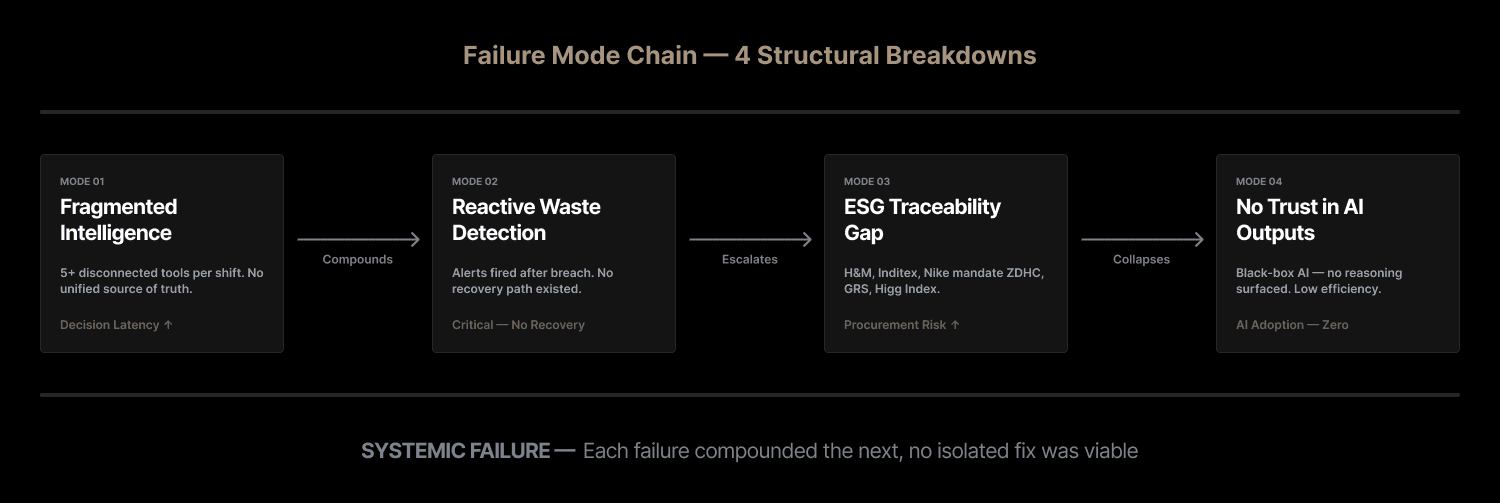
Enterprise textile operations already had CRMs, ERP systems, and dashboards — but strategic decisions remained slow. Insights were scattered, requiring manual context-switching across systems. A simultaneous regulatory shift forced factories to build ESG traceability infrastructure that most didn't have, and had no roadmap to build.
Design Question

02 - RESEARCH
Understanding decision friction in factory / industry environments
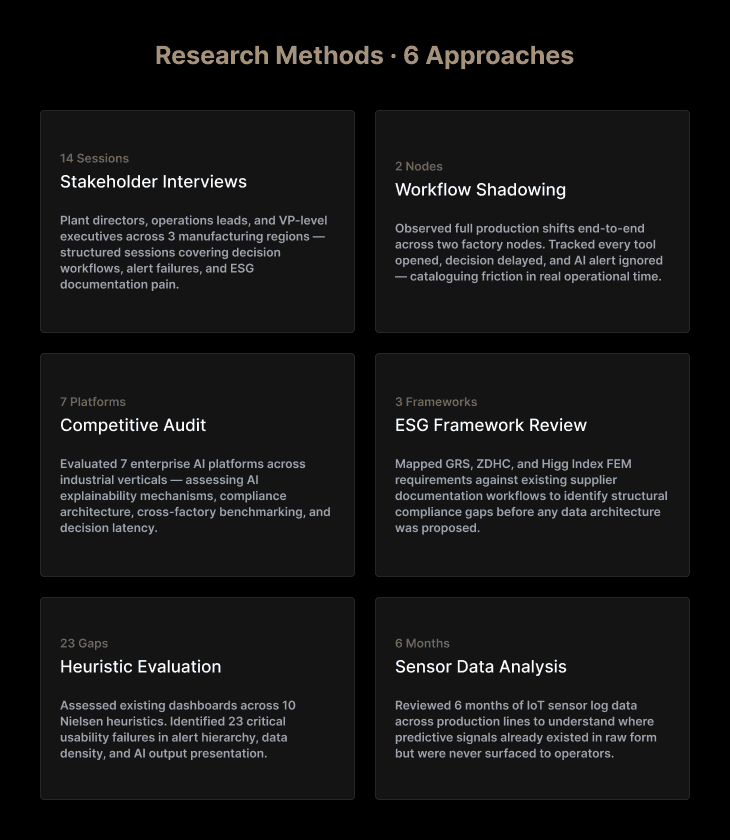
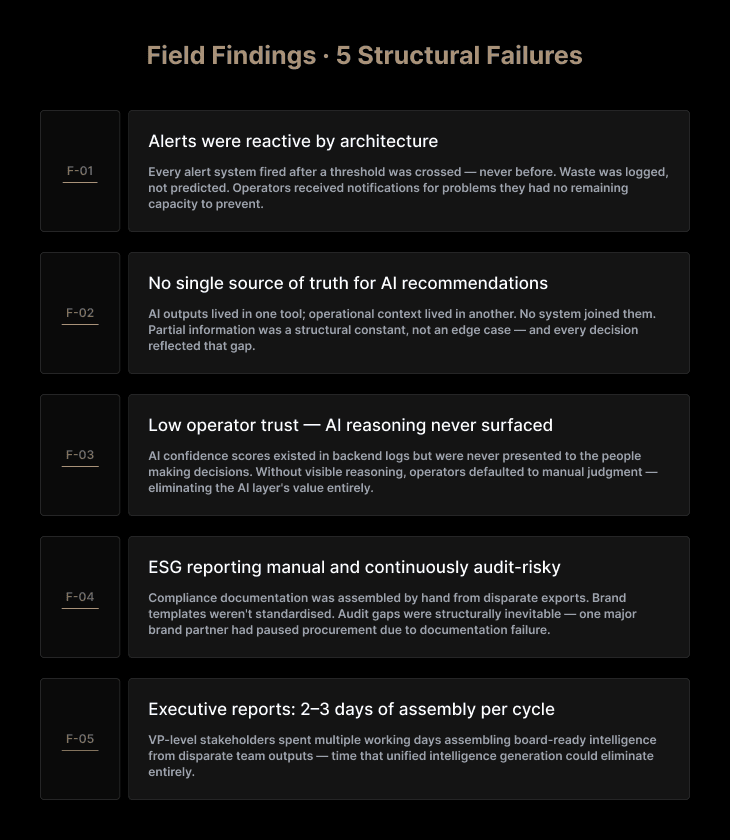
Research focused on how decisions actually happen — who makes them, what data they need, and precisely where breakdowns occur. ESG compliance requirements were mapped against existing documentation workflows to identify traceability gaps before a single screen was designed.
03 — PERSONAS
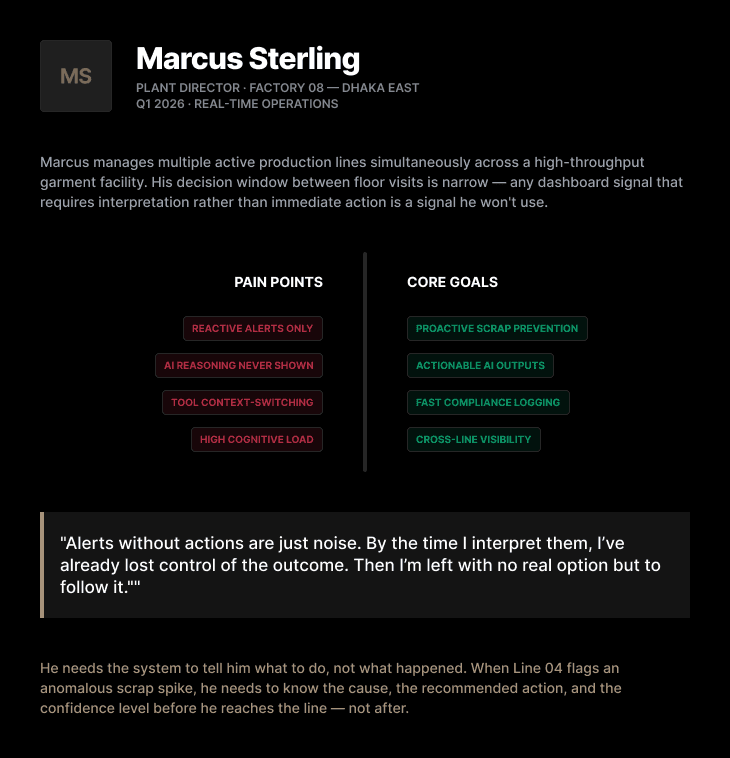
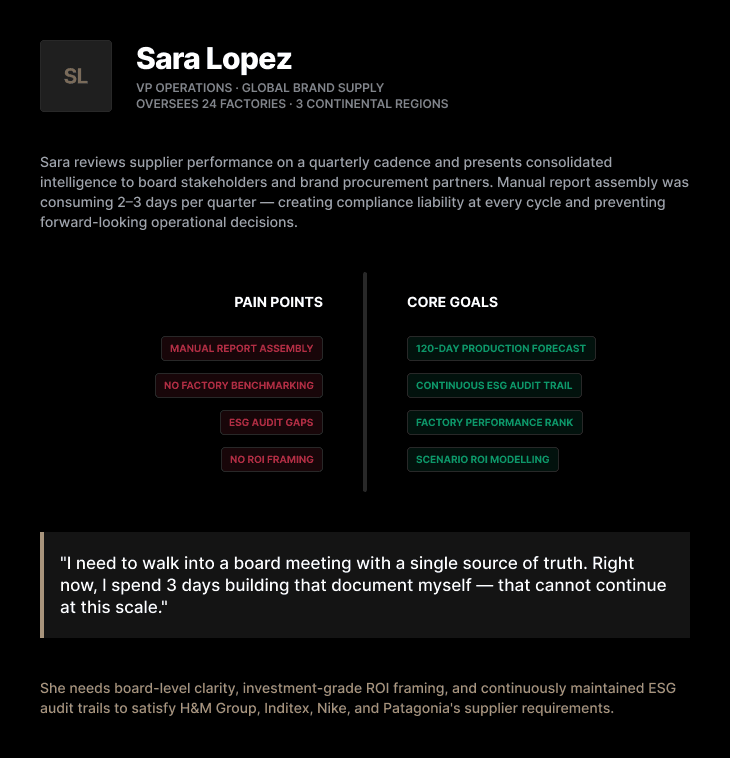
Two primary users. Very different contexts.
The platform serves both operational and executive decision-makers. Designing for both required a layered information architecture — same underlying data, fundamentally different abstractions, time scales, and stakes.
04 — ARCHITECTURE
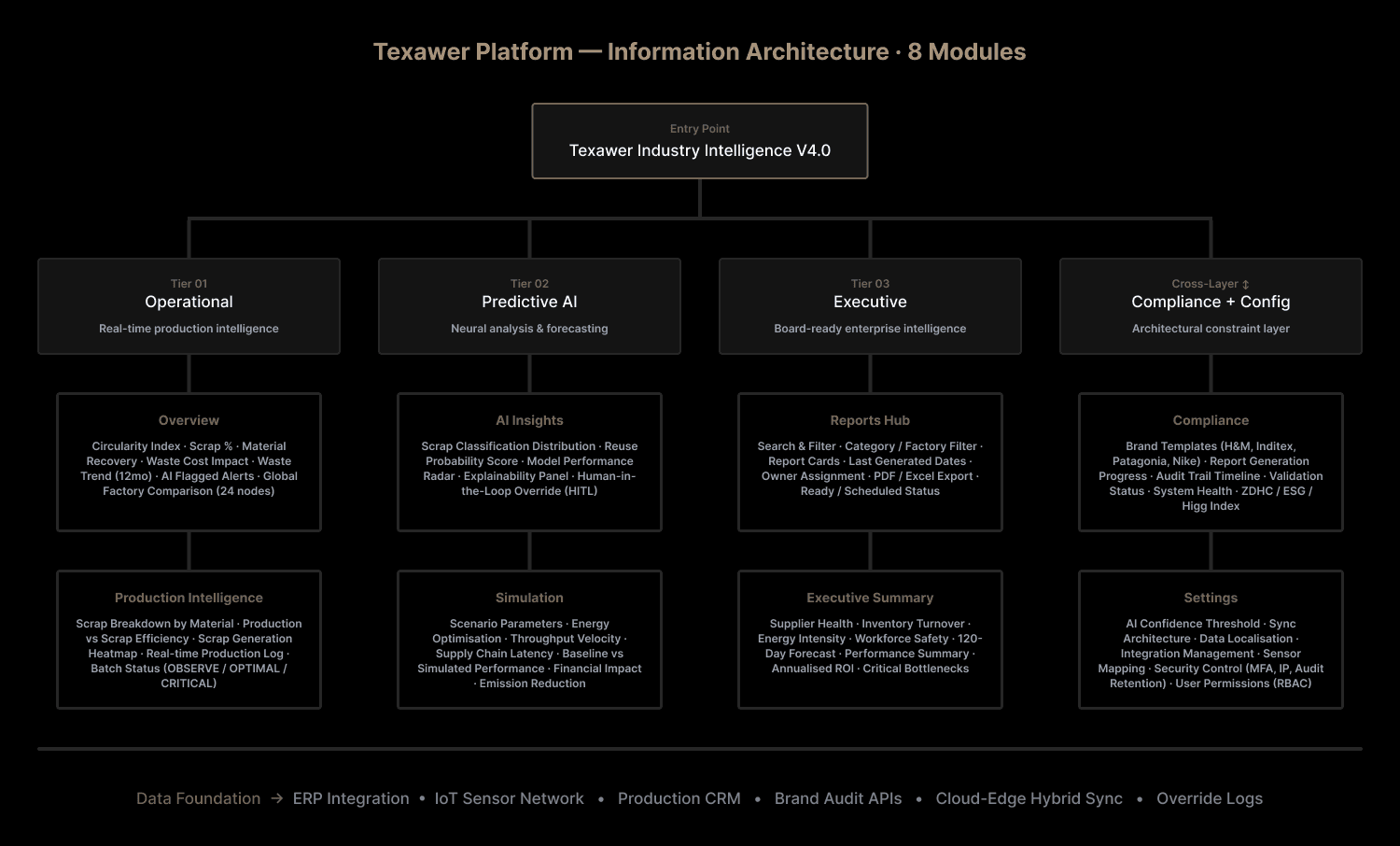
Structured around decision workflows, not reporting layers
Three tiers of intelligence — operational, predictive, and executive — with compliance threaded as a cross-cutting architectural constraint rather than an isolated feature module. Every data flow was designed to generate an audit trail without additional operator effort.
05 — KEY SCREENS
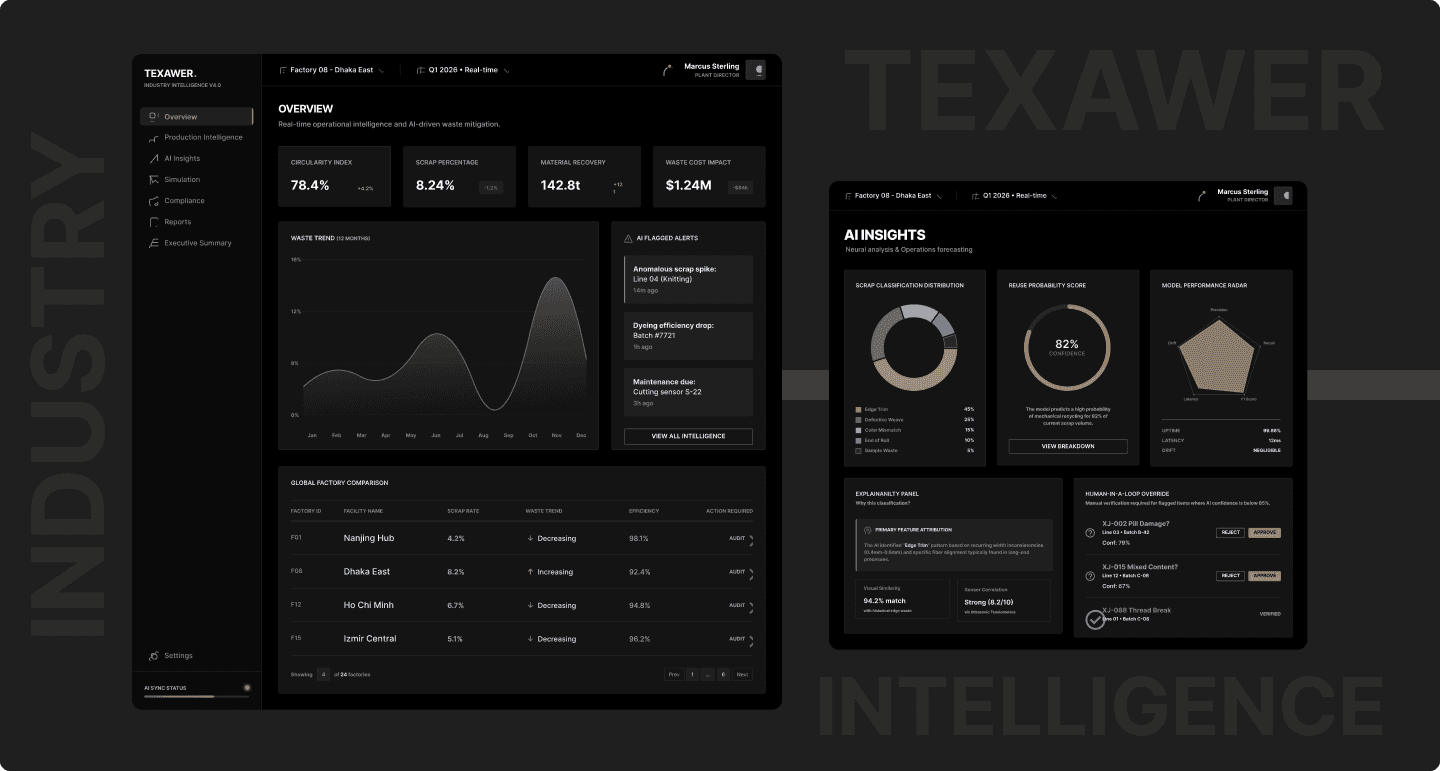
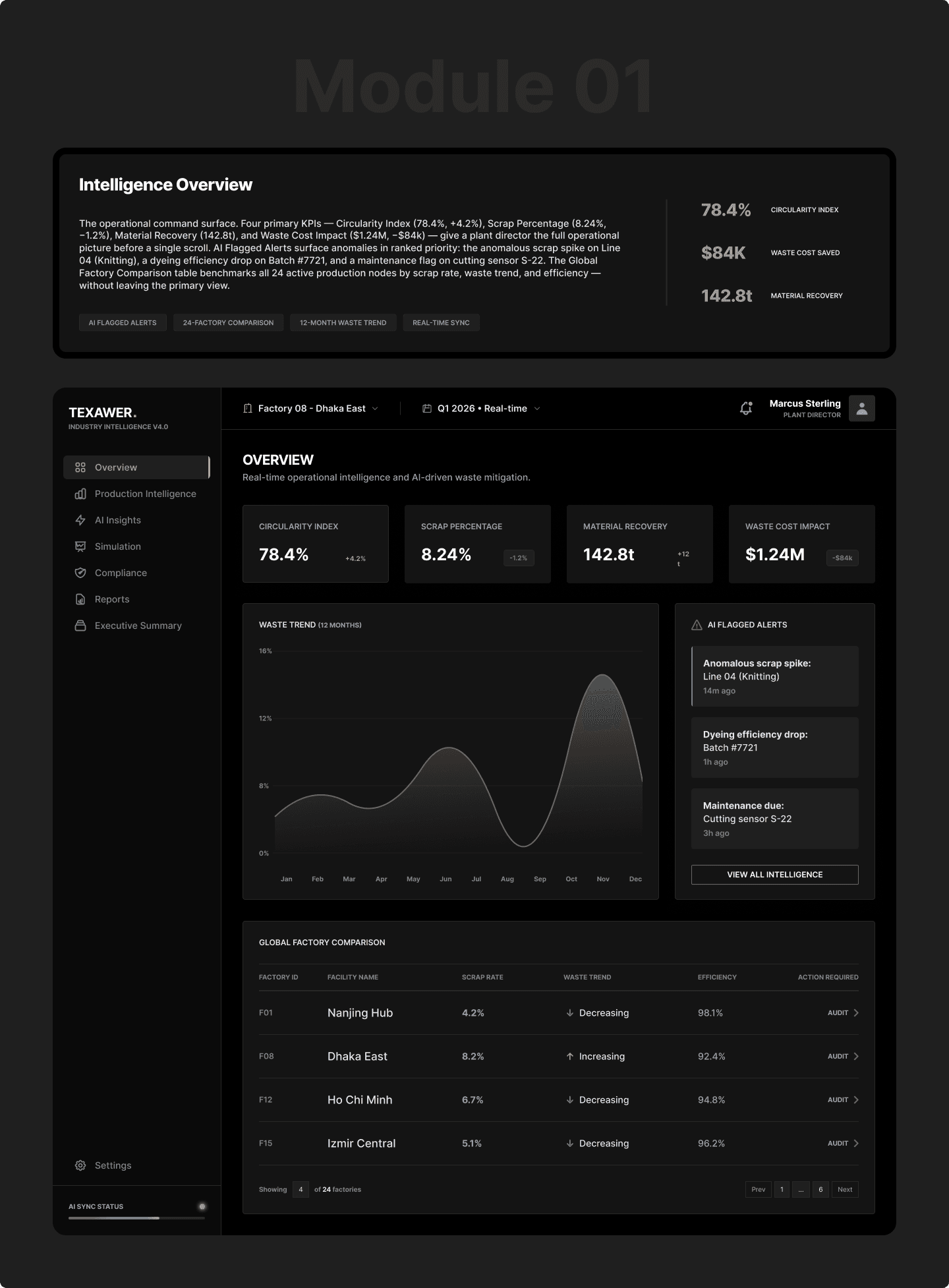
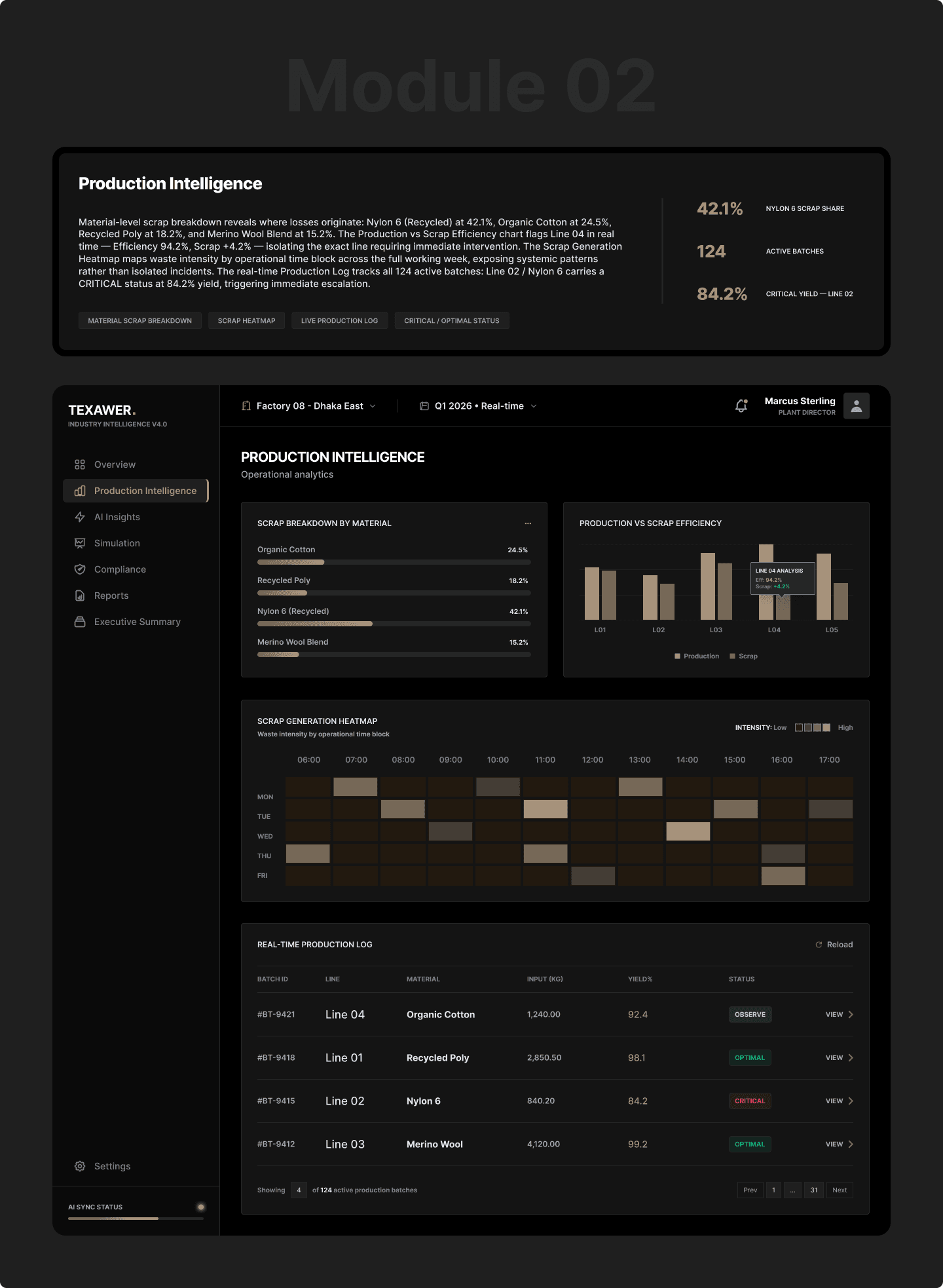
From data to decision across 8 modules
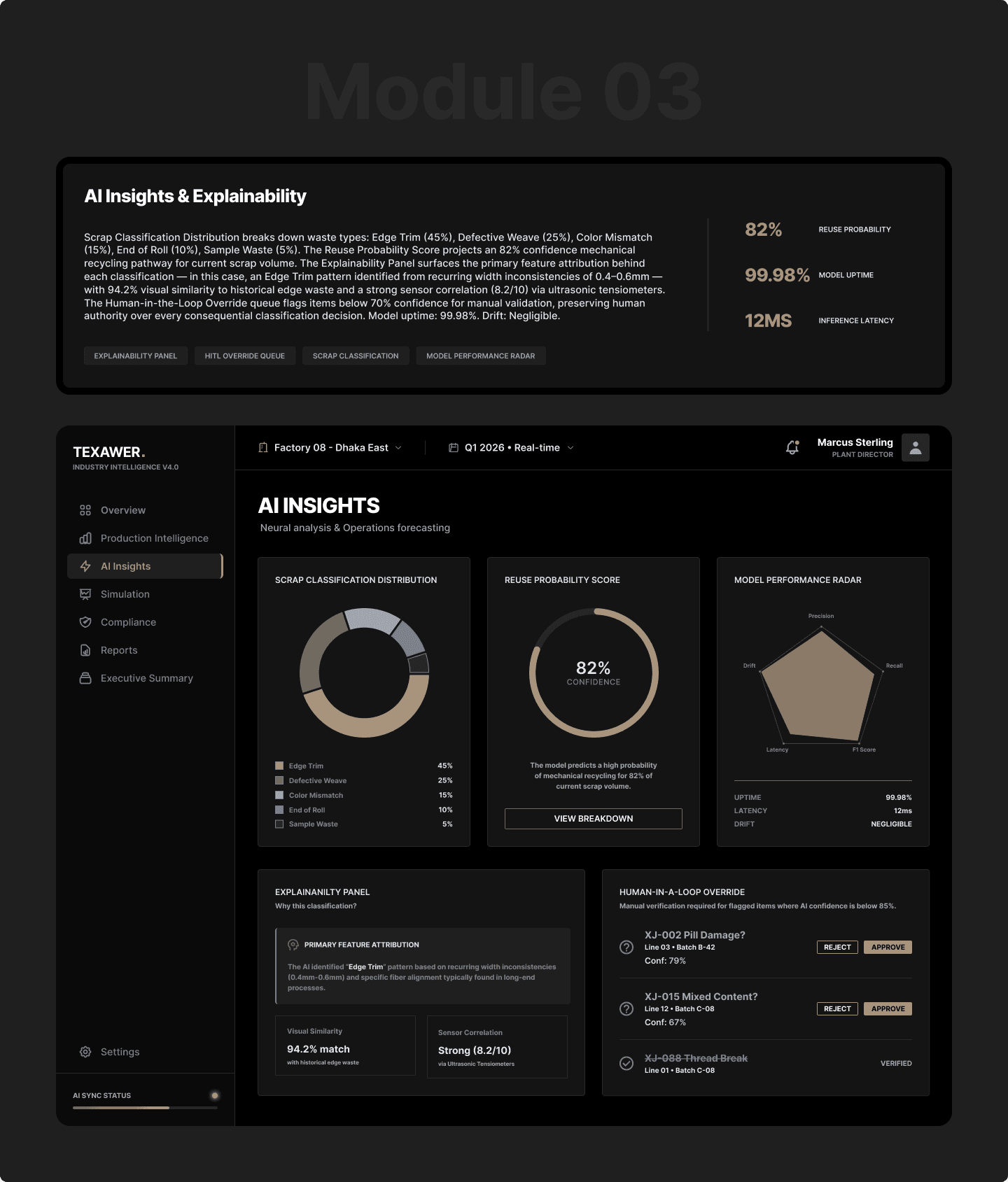
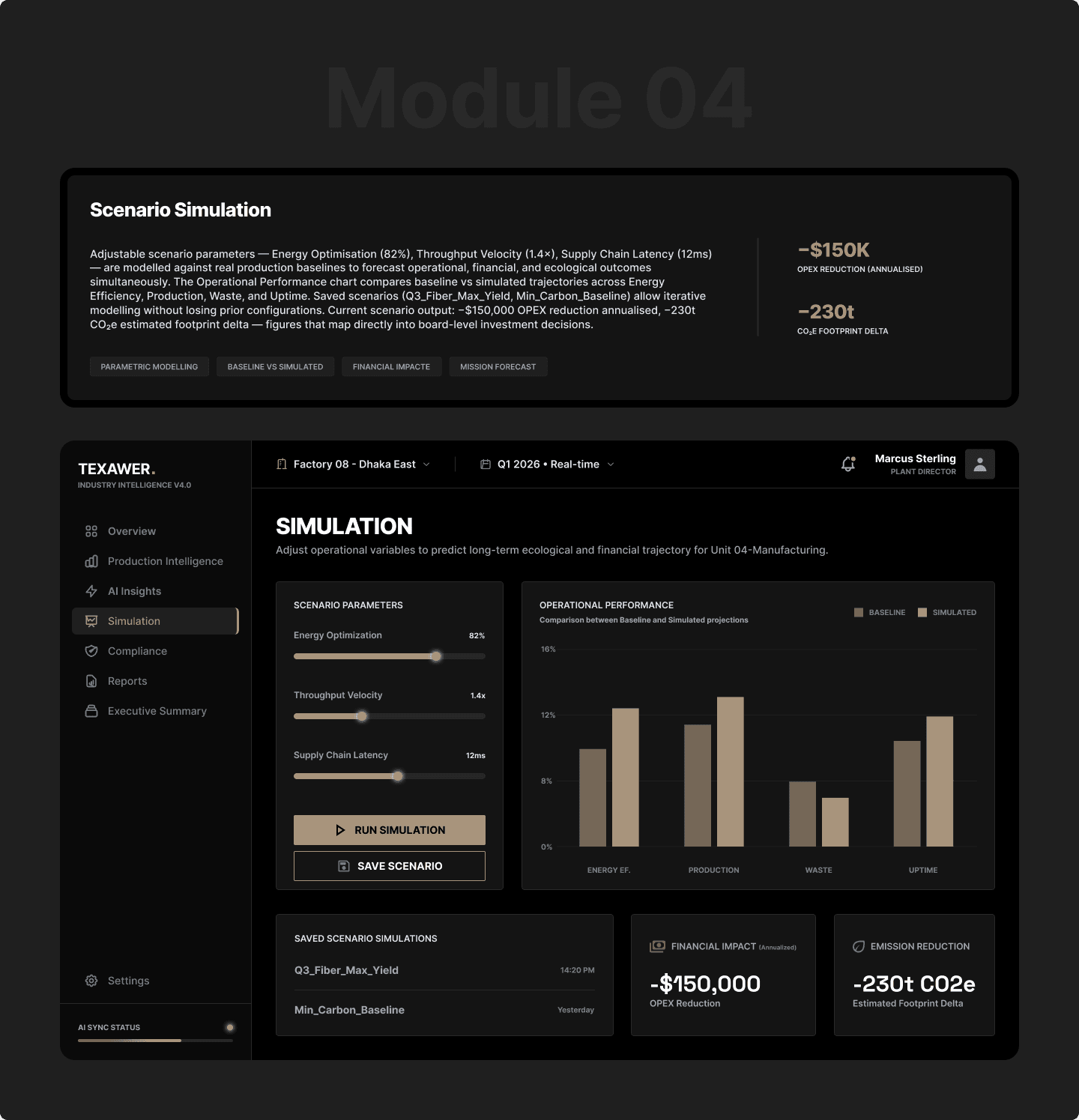
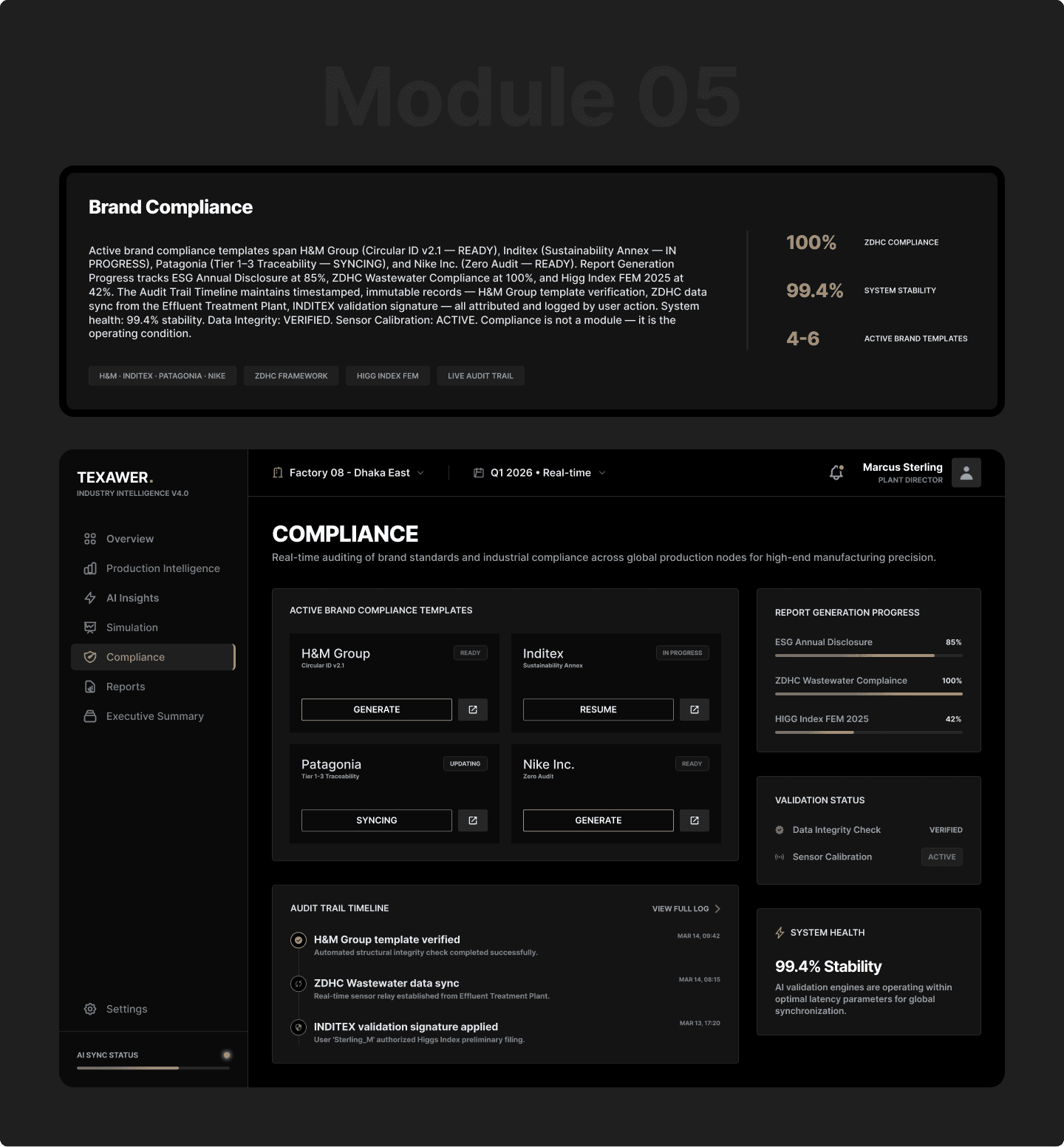
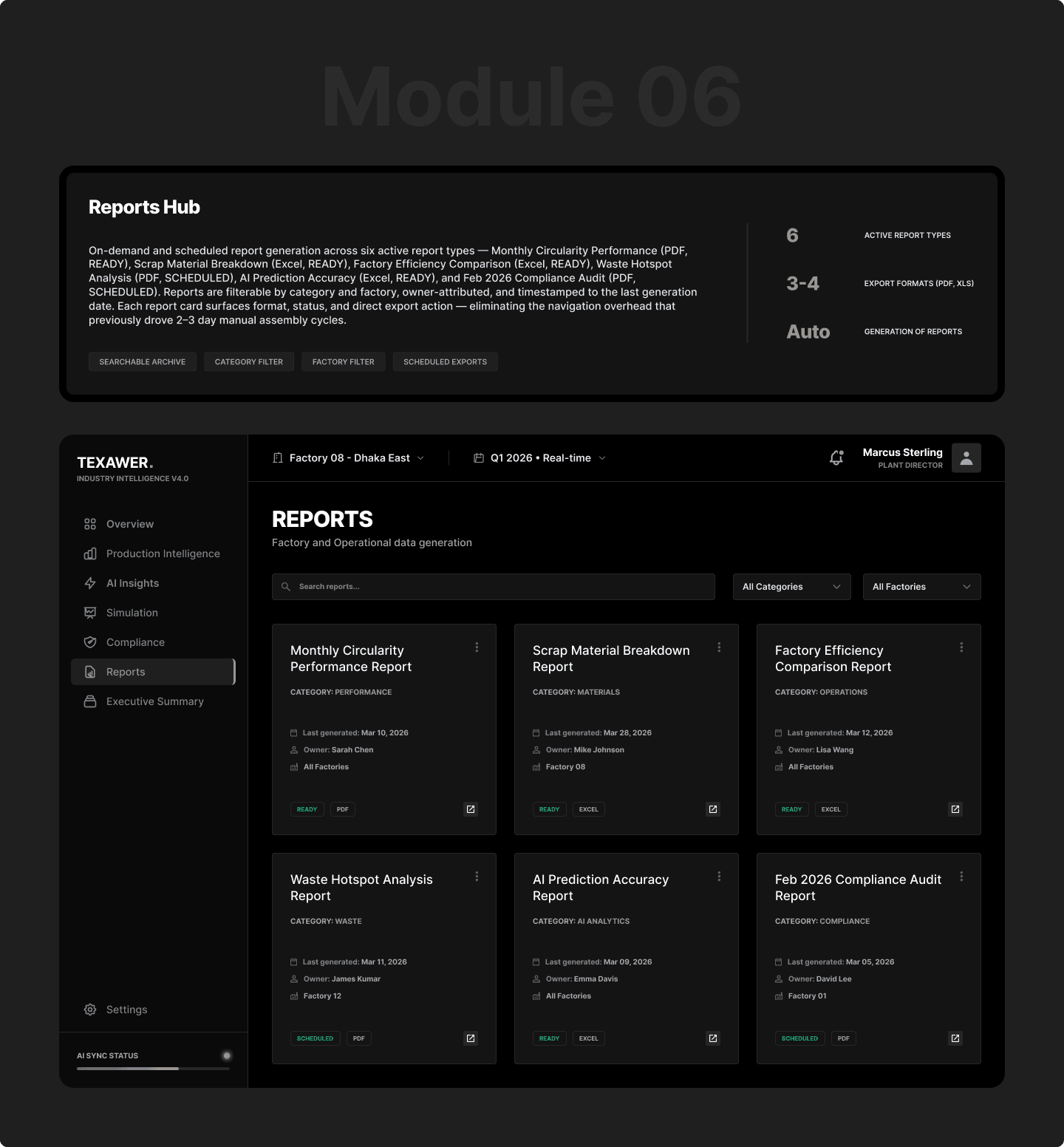
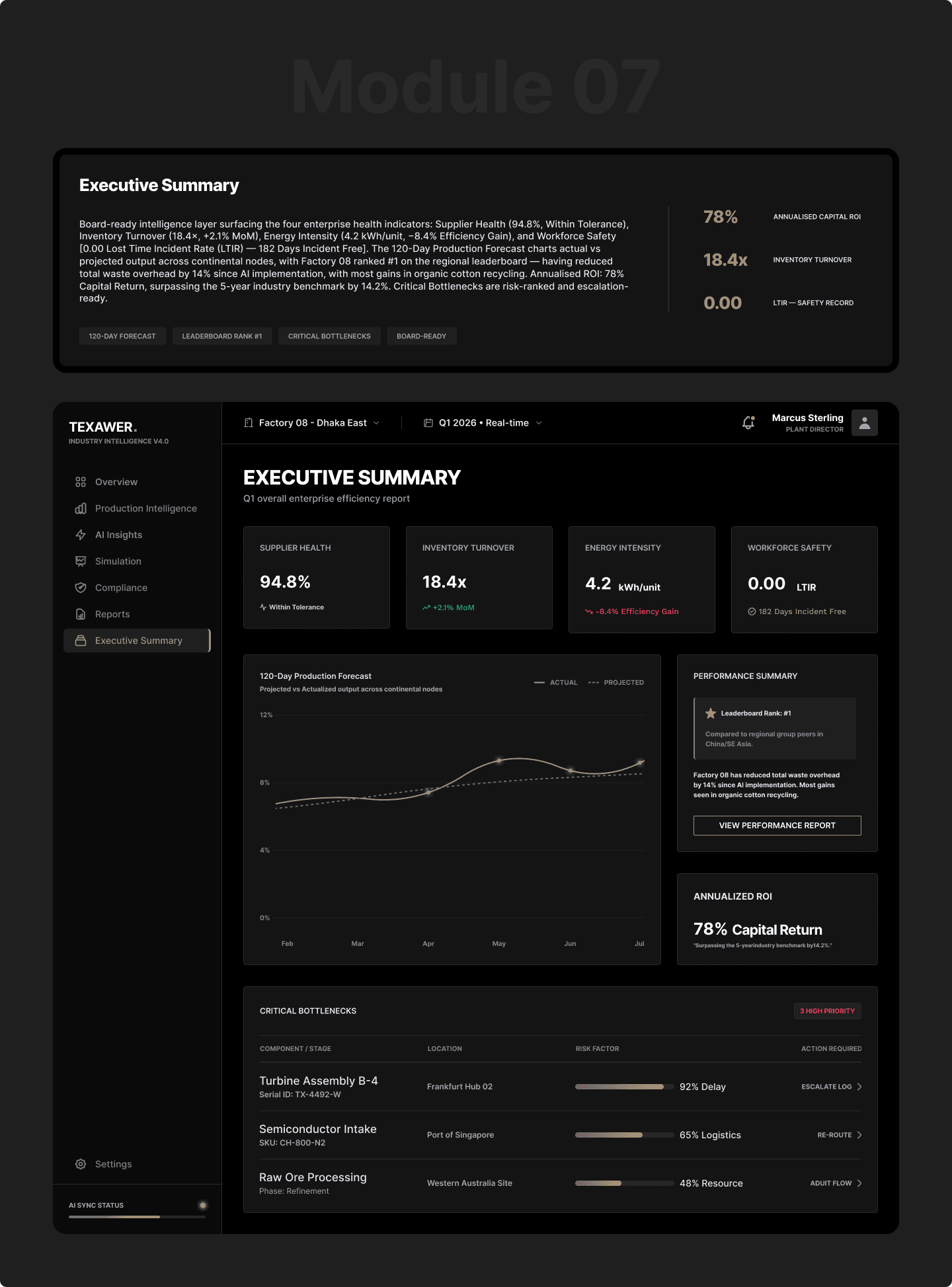
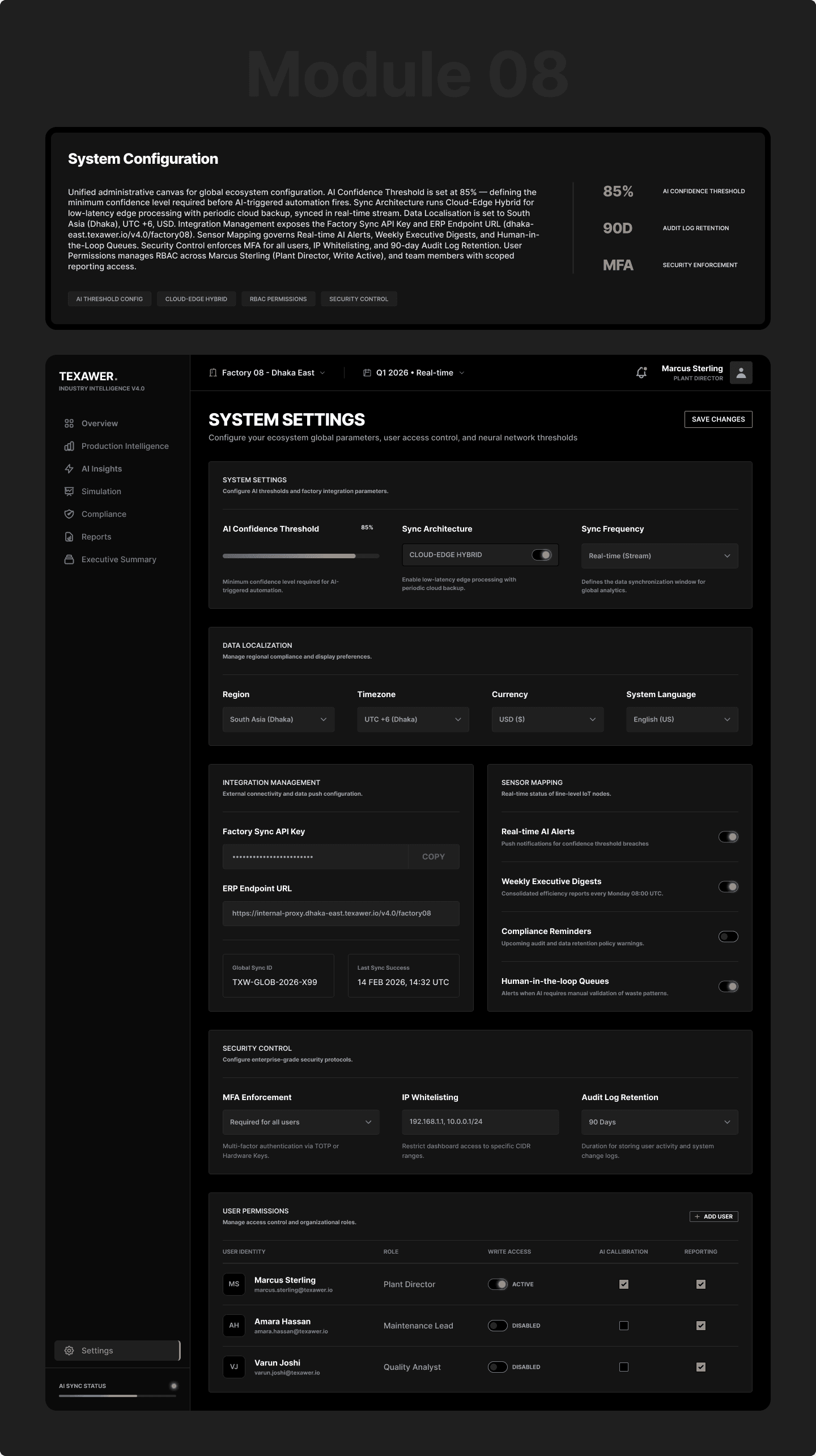
Every screen answers a specific operational decision question. The platform runs a dark enterprise UI system with a gold action palette — every module was designed with a distinct cognitive load budget calibrated to the time its primary user has available to act. No decoration; every element carries decision weight.
06 — DESIGN DECISIONS
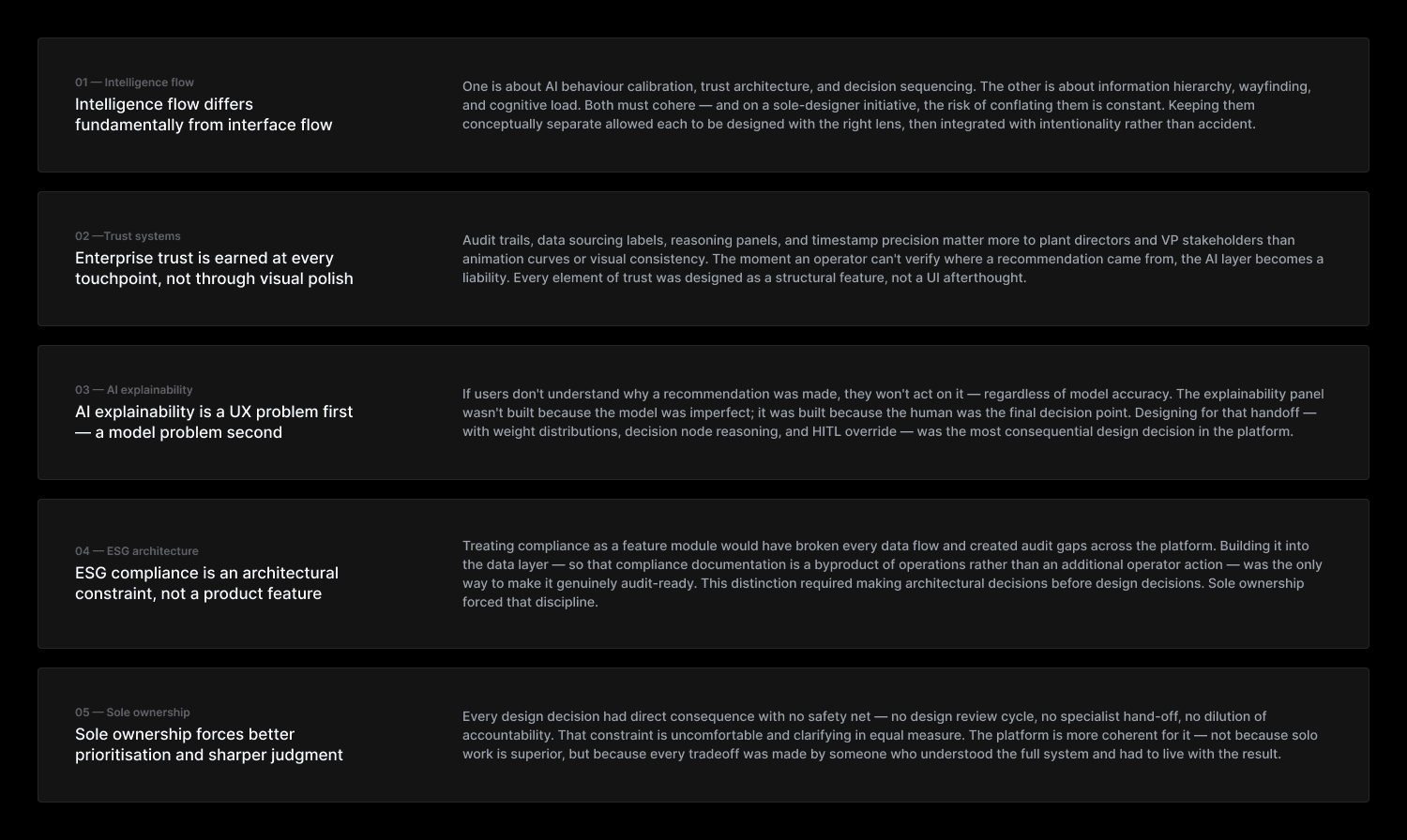
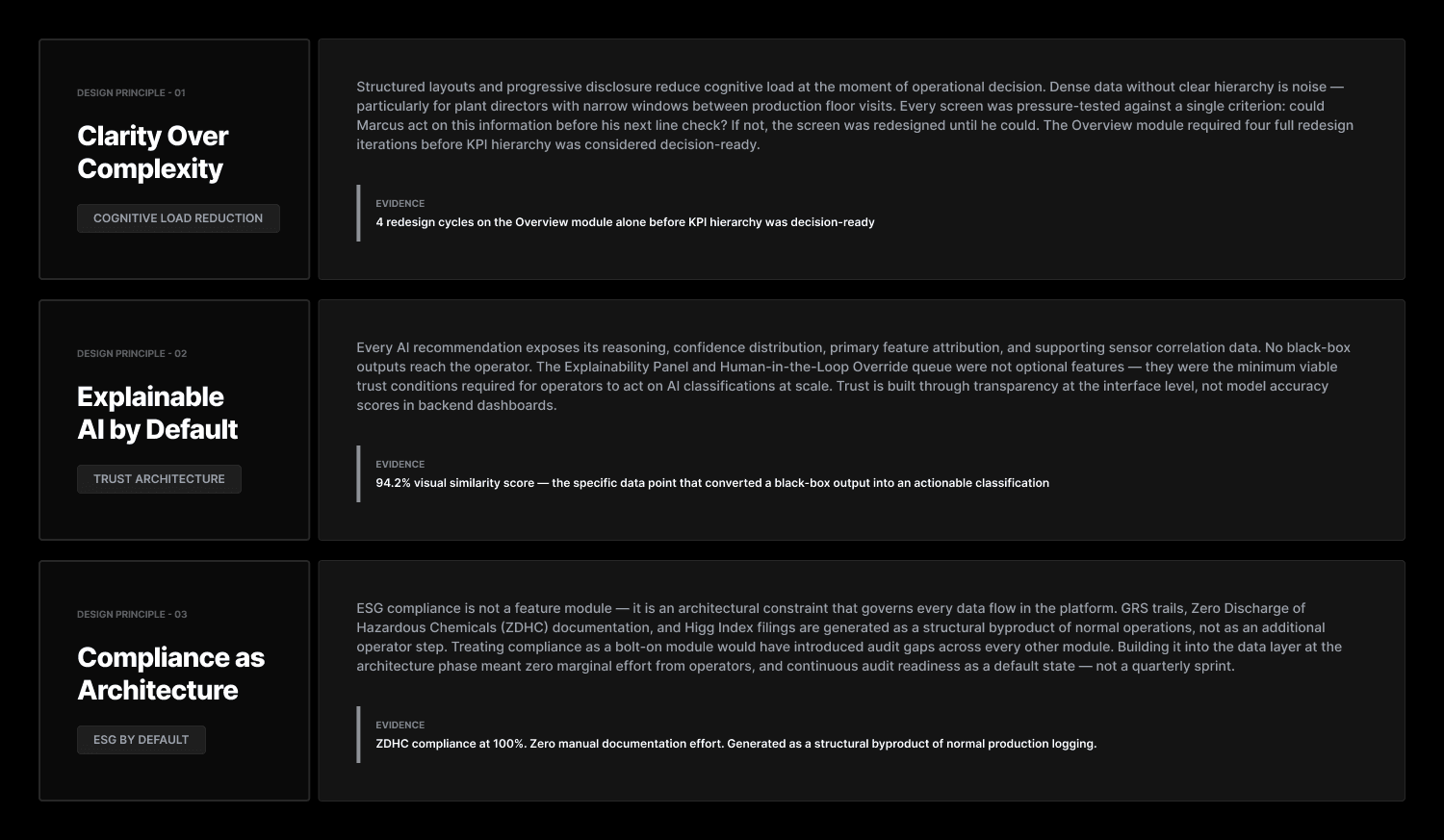
Three principles that shaped every screen
Operating as the sole designer meant every principle had to be load-bearing. No room for decorative rationale — each decision needed to resolve a specific failure mode identified in research.
07 — OUTCOMES
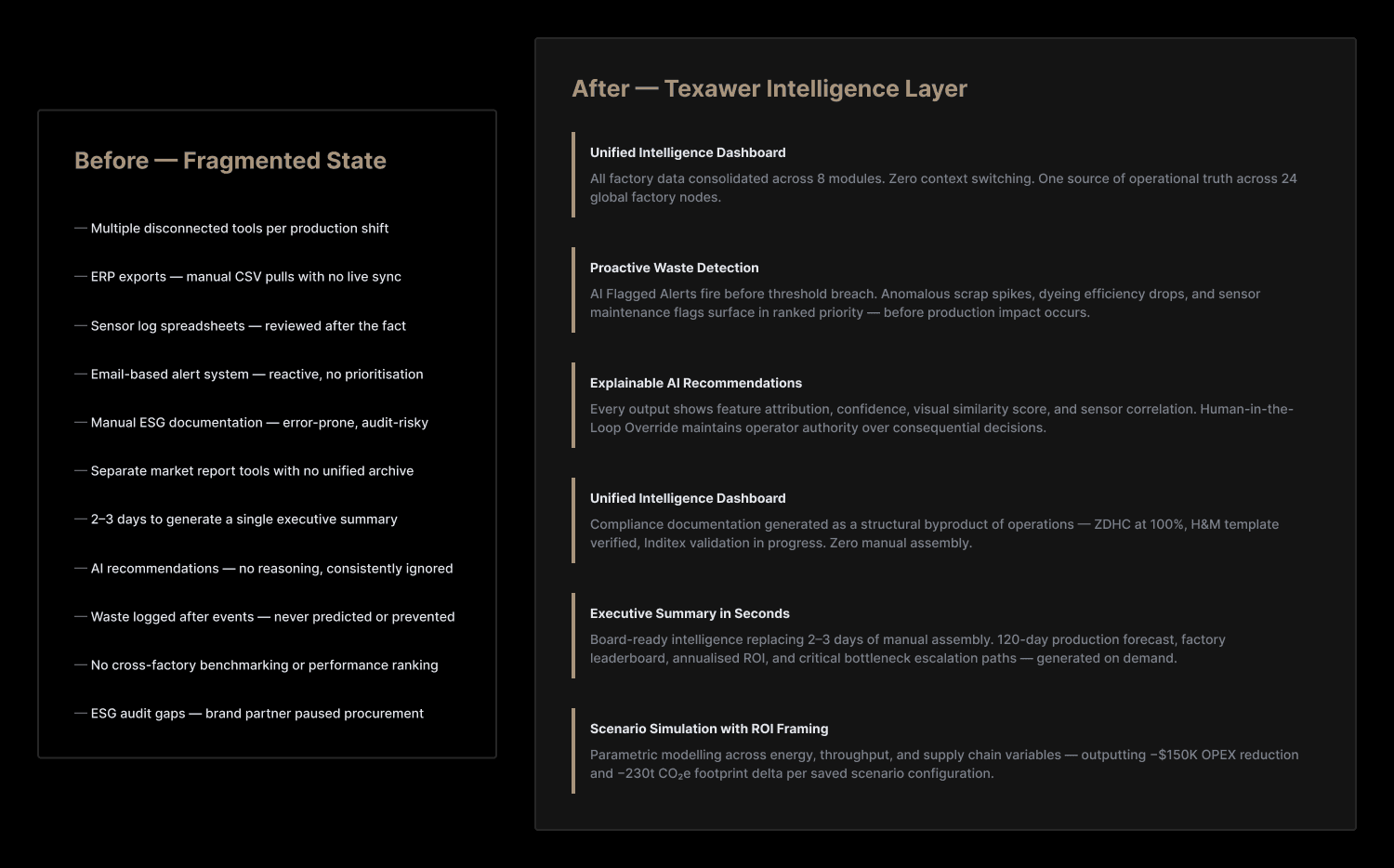
From 9 fragmented tools to one intelligence layer

08 — REFLECTION
What sole ownership actually demands
Operating as the only designer on a 9-module enterprise platform meant thinking beyond screens — designing AI behaviour, enterprise workflows, trust systems, and scalable product structure simultaneously, while keeping the experience coherent for someone with very little screen time per decision.